Case study
Calma
A portable mindfulness device for everyday wellbeing.
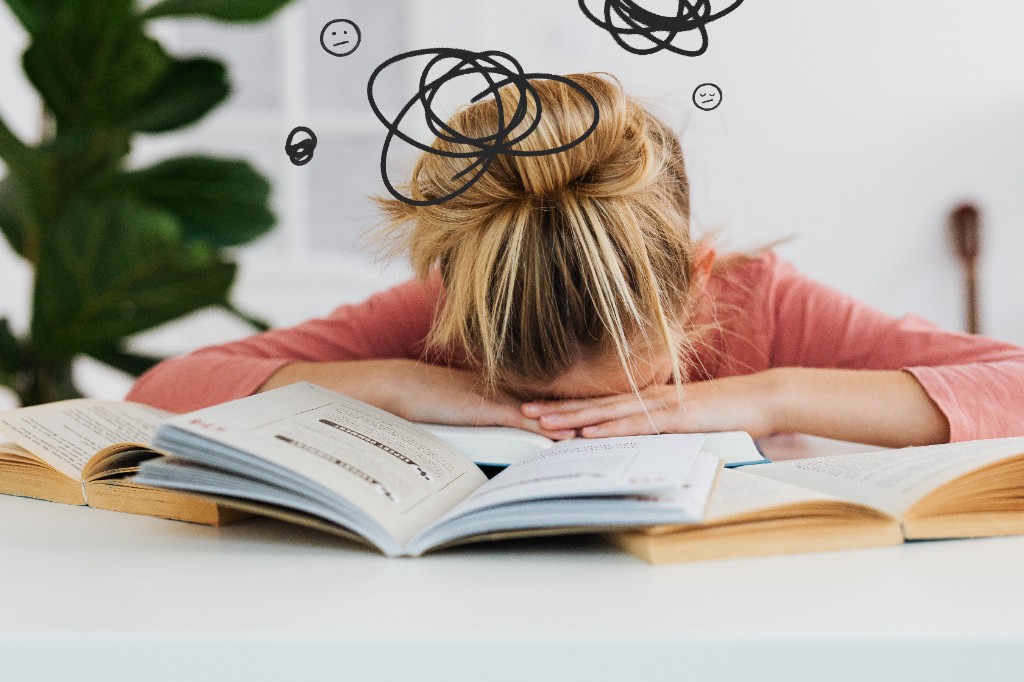
Calma is a portable mindfulness device that transforms moments of stress into opportunities for calm through guided breathing, tactile interactions, and immersive sensory experiences. Built for the demands of everyday student life.
- MY ROLE
- Research, Concept Design, Interaction Design, Physical Prototyping, Arduino
- DURATION
- 6 Months
- TOOLS
- PROJECT
- Graduate Project


overview
Introduction
Calma is a portable mindfulness device designed to help teenagers and university students manage stress through guided breathing and multisensory interaction. Combining tactile controls, calming audio, and visual feedback, it creates immersive moments of pause anywhere from study spaces and libraries to dorm rooms and between classes. Built on an Arduino powered prototype, Calma encourages healthy mindfulness habits without relying on smartphones or apps.
The Problem
Teenagers and university students face constant academic pressure, but existing mindfulness tools are often screen based, time intensive, or difficult to integrate into everyday routines.
Problem Statement
Teenagers and university students experience frequent academic stress but lack accessible, screen free tools that provide immediate emotional support without requiring lengthy sessions or collecting personal data.
Four key challenges shaped the design brief:
- 01Constant academic stress.
- 02Lack of tools that help people relieve tension quickly.
- 03Having to store personal data in apps.
- 04Mindfulness that feels time-consuming and inaccessible.
Environmental noise, limited personal space, and tight schedules mean the design must emphasize portability and fast, simple interactions for users who are constantly on the go.
How Might We
How might we help students and teenagers practice brief, sensory mindfulness anywhere without relying on phones, long sessions, or data heavy apps?
Research · Precedents
Relevant precedents
Three products shaped how Calma could combine guided audio, brief sensory sessions, and interactive feedback for everyday stress relief.
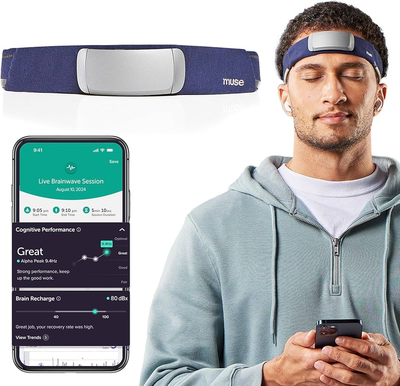
Muse Headband
During meditation, a wearable EEG gadget provides aural input in real time.
Relevance: Mindfulness is supported by guided audio and biofeedback.
Influence: Demonstrates how interactive relaxation experiences may be produced using physiological data.
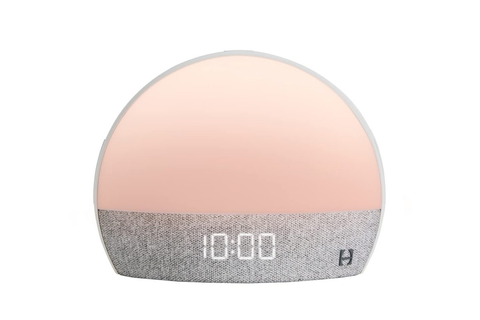
Hatch Restore
A nightstand gadget that combines guided meditation with calming noises.
Relevance: Relaxation with music in small private areas.
Influence: Emphasizes brief, simple mindfulness exercises for students and teenagers.
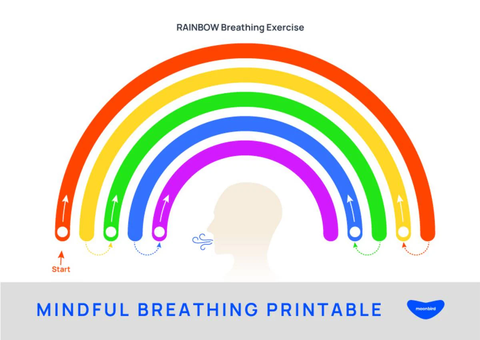
RAINBOW Relaxation System
Breathing and heart rate are used in an interactive biofeedback exhibit to control sound and graphics.
Relevance: Reduces stress by combining tactile and sensory feedback.
Influence: Encourages dynamic communication between Calma's user input and system output.
Research · Users & Stakeholders
Who Calma is for
Primary users, the people who support them, and the everyday campus contexts where short mindfulness sessions need to fit.
Teenagers
Ages 14–22 navigating academic stress, social pressure, and a need for quick emotional reset tools that feel private and approachable.
University students
Students who need brief mindfulness breaks between study blocks or classes — without long sessions or phone-based wellbeing apps.
Stakeholders
Educational institutions, student wellness centers, university counselors, and campus mental health programs supporting student wellbeing.
Everyday context
Libraries, dorms, study lounges, and home designed for short 3–10 minute sessions amidst noise, limited space, and tight schedules.
Research · Concept Foundation
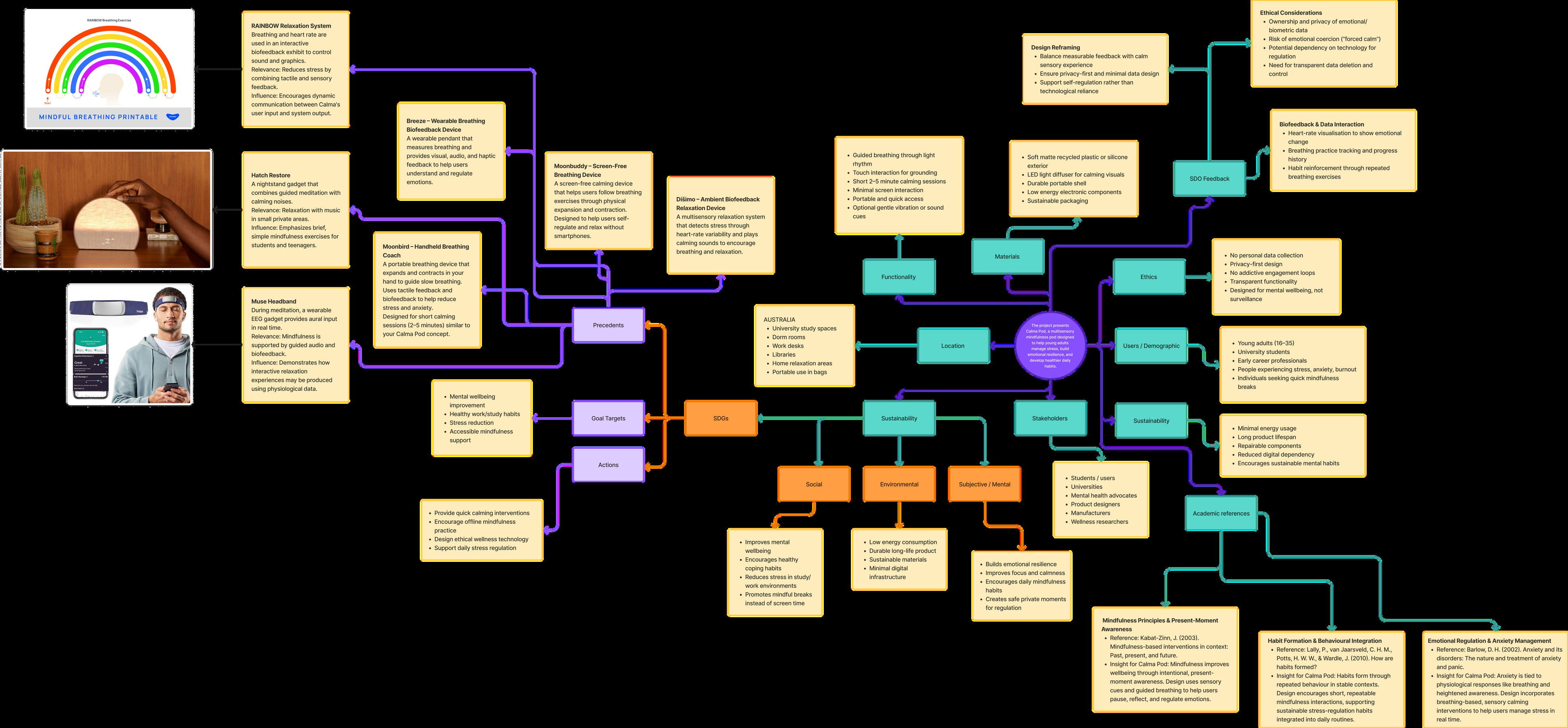
Calma sits on three theoretical foundations: emotional regulation and anxiety management (Barlow, 2002), habit formation through brief repeated sessions (Lally et al., 2010), and mindfulness principles that encourage present-moment awareness through guided sensory cues (Kabat-Zinn, 2003). Together they link mental health support with UN SDG 3 — Good Health and Wellbeing.
Emotional Regulation
Habit Formation
Mindfulness
Research · Needs and Functions
From research and precedents, I translated student needs into portable, privacy-first functions that fit 3–10 minute breaks between study or classes.
- 1.Guided breathing through audio cues for quick emotional regulation.
- 2.Tactile interfaces that support grounding without heavy screen use.
- 3.Short 2–10 minute calming sessions that fit campus schedules.
- 4.Portable form factor for bags, desks, libraries, and dorms.
- 5.Privacy-first approach — no personal data stored in apps.
- 6.Optional gentle vibration or sound cues for sensory feedback.
- 7.Arduino-driven system coordinating display, speaker, and sensors.
- 8.Routine integration so calm can become a repeatable daily habit.
System Design
- 1.Explored early form and interaction ideas for a handheld stress-buster that could live in everyday campus spaces.
- 2.Mapped a simple breathing loop — Start, Inhale, Hold, Exhale, Wait, Repeat — as the core system behaviour.
Functionality & Purpose
Calma is a small and portable device equipped with:
Using audio cues to guide breathing exercises
Interactive mindfulness using tactile interfaces
The idea is to provide users with a small stress buster so they may engage in brief, immersive mindfulness sessions anywhere.
The Arduino Uno serves as the central control system, coordinating all digital and physical interactions: driving the TFT display, managing audio output through the speaker, and processing input from tactile sensors. The system supports performative interaction and routine integration.
Research · Breathing Methods
What are the breathing types?
Calma offers multiple guided breathing techniques, allowing users to choose the practice that best suits their needs, from structured Box Breathing to gentle Relax Breathing.
Box Breathing
4
Inhale
4
Hold
4
Exhale
Coherent Breathing
5
Inhale
5
Exhale
Relax Breathing
4
Inhale
7
Hold
8
Exhale
Nostril Breathing
left & right nostril alternate breathing
4
Inhale
3
Hold
4
Exhale
Design principles reinforced by research:
- 1.“Sessions must stay short enough for campus life (roughly 3–10 minutes).”
- 2.“Interaction should work without requiring personal data or phone lock-in.”
- 3.“Sensory cues (audio, light, touch) matter more than dense UI.”
- 4.“Portability is essential for libraries, dorms, and study spaces.”
- 5.“Habit formation depends on repeatable, low-friction routines.”
Mid Fidelity
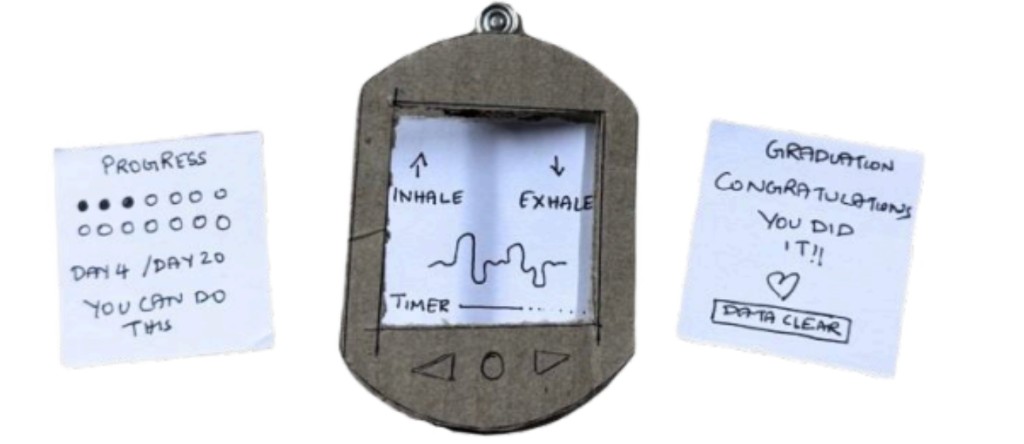
I built a cardboard mid-fidelity prototype to test the handheld form, screen layout, and button placement — exploring inhale/exhale guidance, progress tracking, and graduation feedback before moving into digital and hardware builds.
Final Design
Incorporating research & design elements
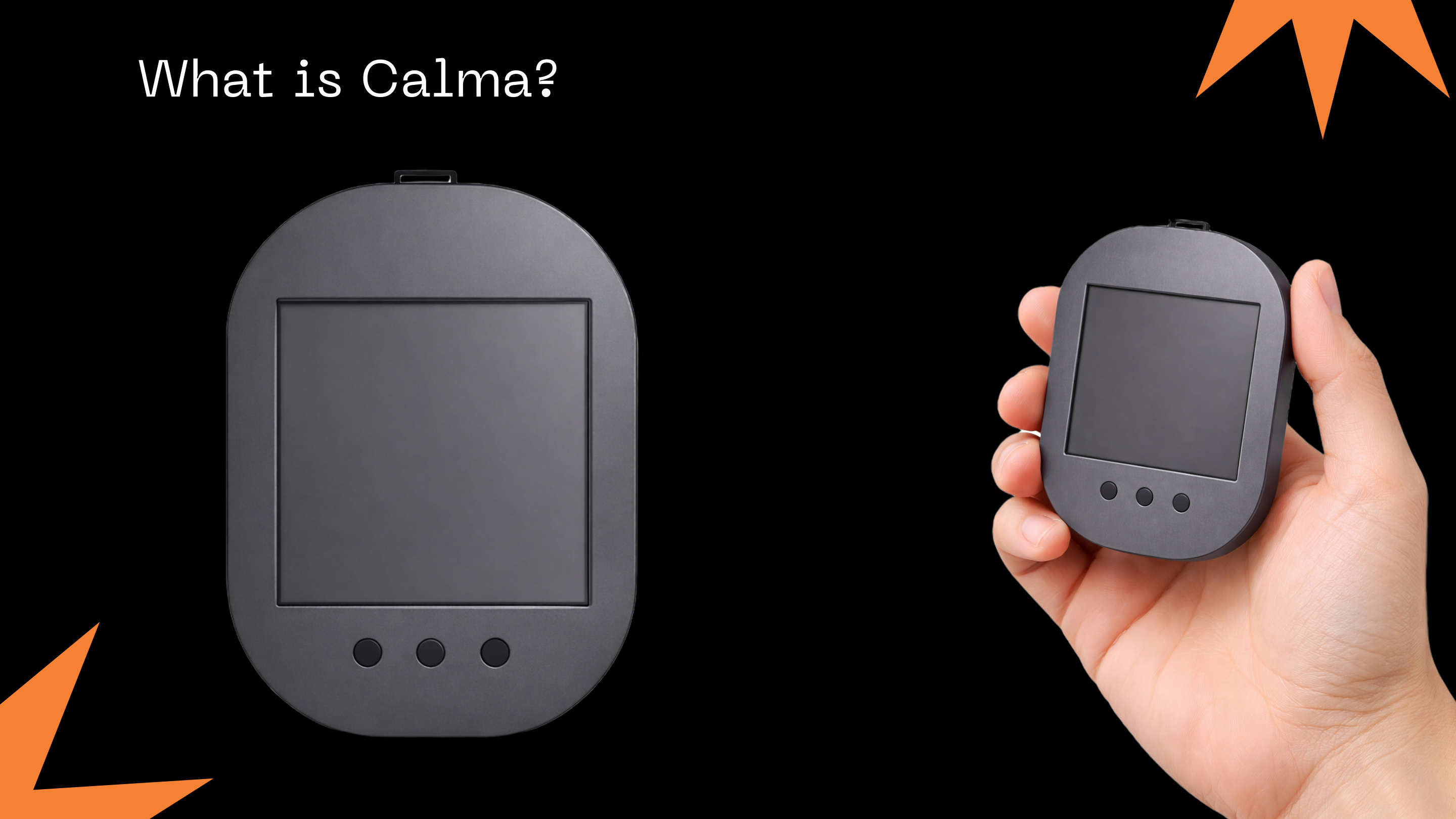
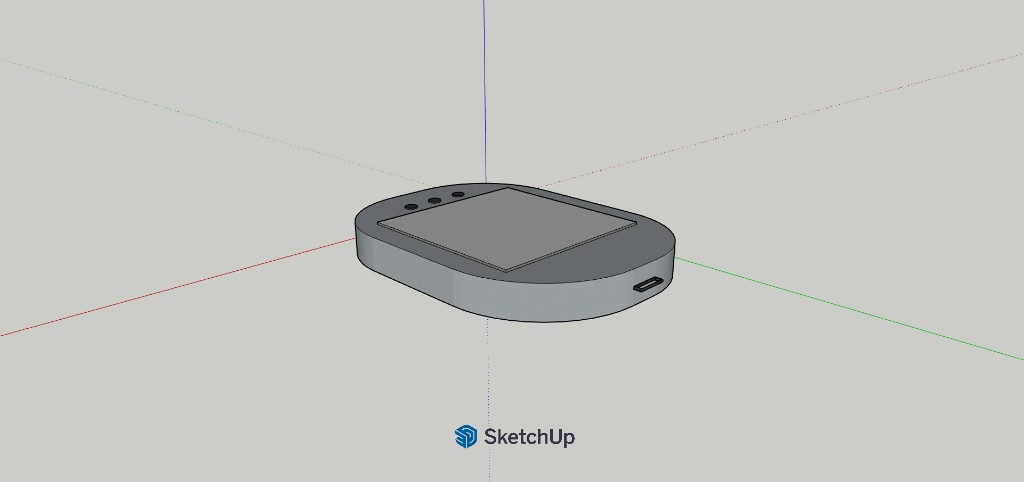
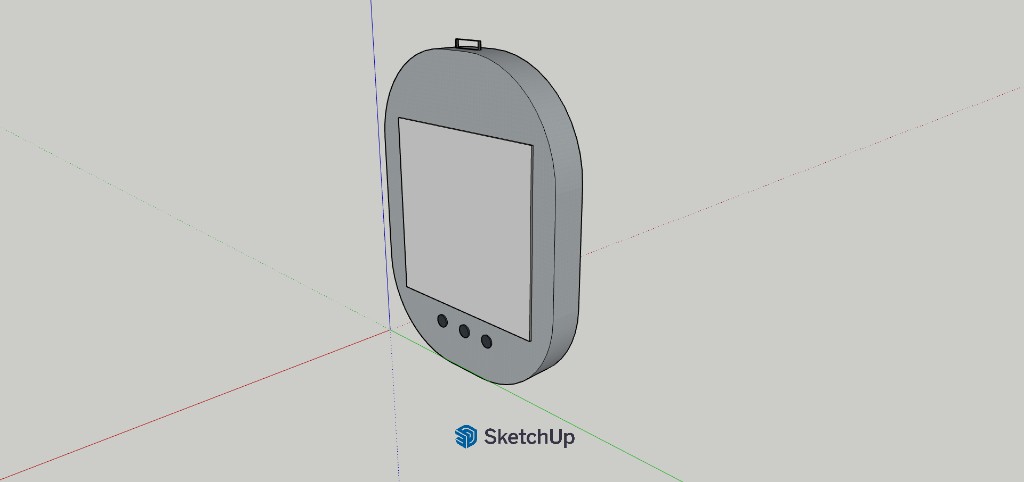
Calma is a handheld companion with a square display, three tactile buttons, and a strap loop for everyday carry. It delivers brief guided breathing and sensory mindfulness so students can reclaim calm between study blocks — aligning interactive product design with emotional regulation, habit formation, and mindfulness research.
3D Model
I modelled Calma in SketchUp to explore the handheld form, screen recess, tactile controls, and strap loop before refining the final physical prototype.
High Fidelity
I designed the Calma interface in Figma first, then translated each screen into a pixel-friendly Arduino display version that fits the square TFT — keeping the same flows for avatar selection, breathing, progress, and rewards.
Figma Designs
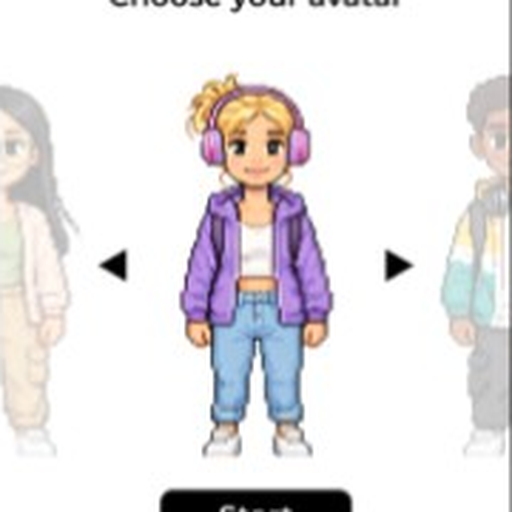
Avatar Screen
Arduino Screens
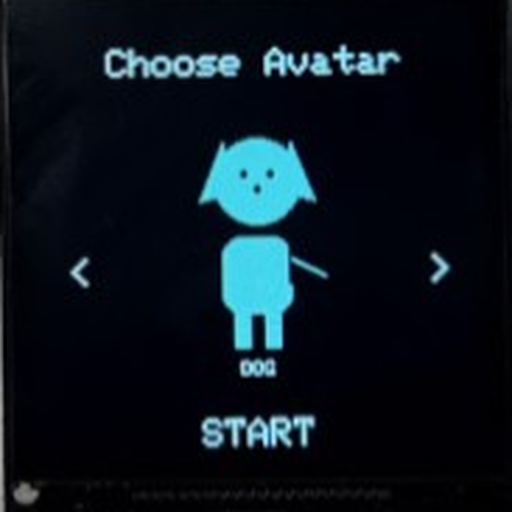
Avatar Screen
Prototype Video
Design Decisions
01
Portable calm over phone apps
Calma is a physical device so students can practice mindfulness without opening apps or storing personal wellbeing data on their phones.
02
Short sessions for campus life
Interactions are designed for 3–10 minute windows between classes supporting habit formation without demanding long meditation blocks.
03
Sensory guidance through hardware
Audio, tactile input, and a simple display work together so breathing guidance feels embodied coordinated by an Arduino based system architecture.
Reflection
01
Theory made the product sharper
Grounding Calma in emotional regulation, habit formation, and mindfulness research clarified why brief sensory sessions could outperform generic wellness apps for students.
02
Precedents shaped the interaction model
Studying Muse, Hatch Restore, and Rainbow Relaxation helped define how biofeedback, guided audio, and tactile cues could stay lightweight and ethical.
03
Wellbeing belongs in everyday spaces
Designing for libraries, dorms, and study lounges reinforced that calm tools must travel with students not wait for a perfect quiet room.